Girls Adoption Connect
•
September 03, 2024
Breaking the 'Bamboo Ceiling'
Slide descriptions
-
Slide one
Breaking the Bamboo Ceiling
-
Slide two
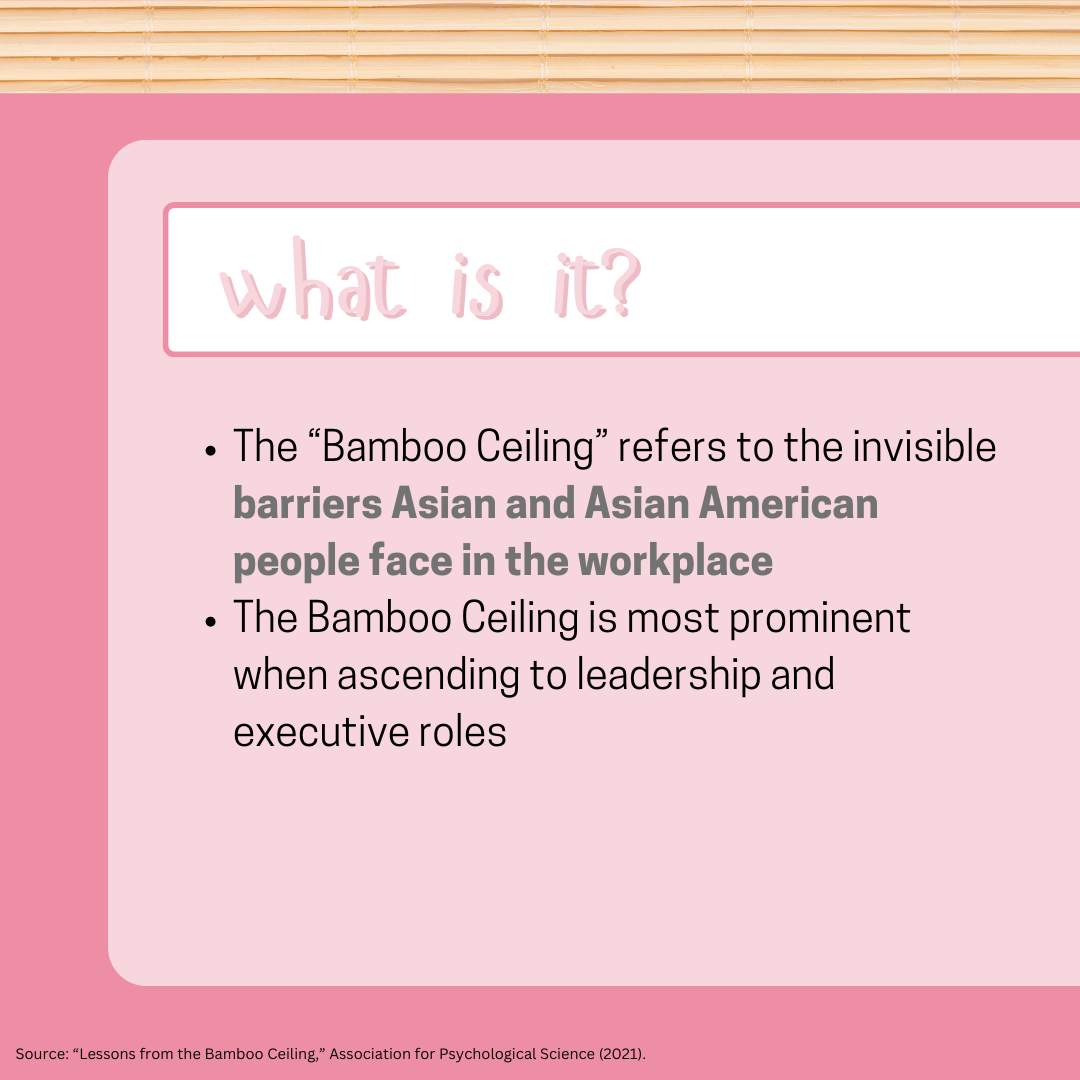
What is it?
The “Bamboo Ceiling” refers to the invisible barriers Asian and Asian American people face in the workplace.
The Bamboo Ceiling is most prominent when ascending to leadership and executive roles.
Source: “Lessons from the Bamboo Ceiling,” Association for Psychological Science (2021).
-
Slide three
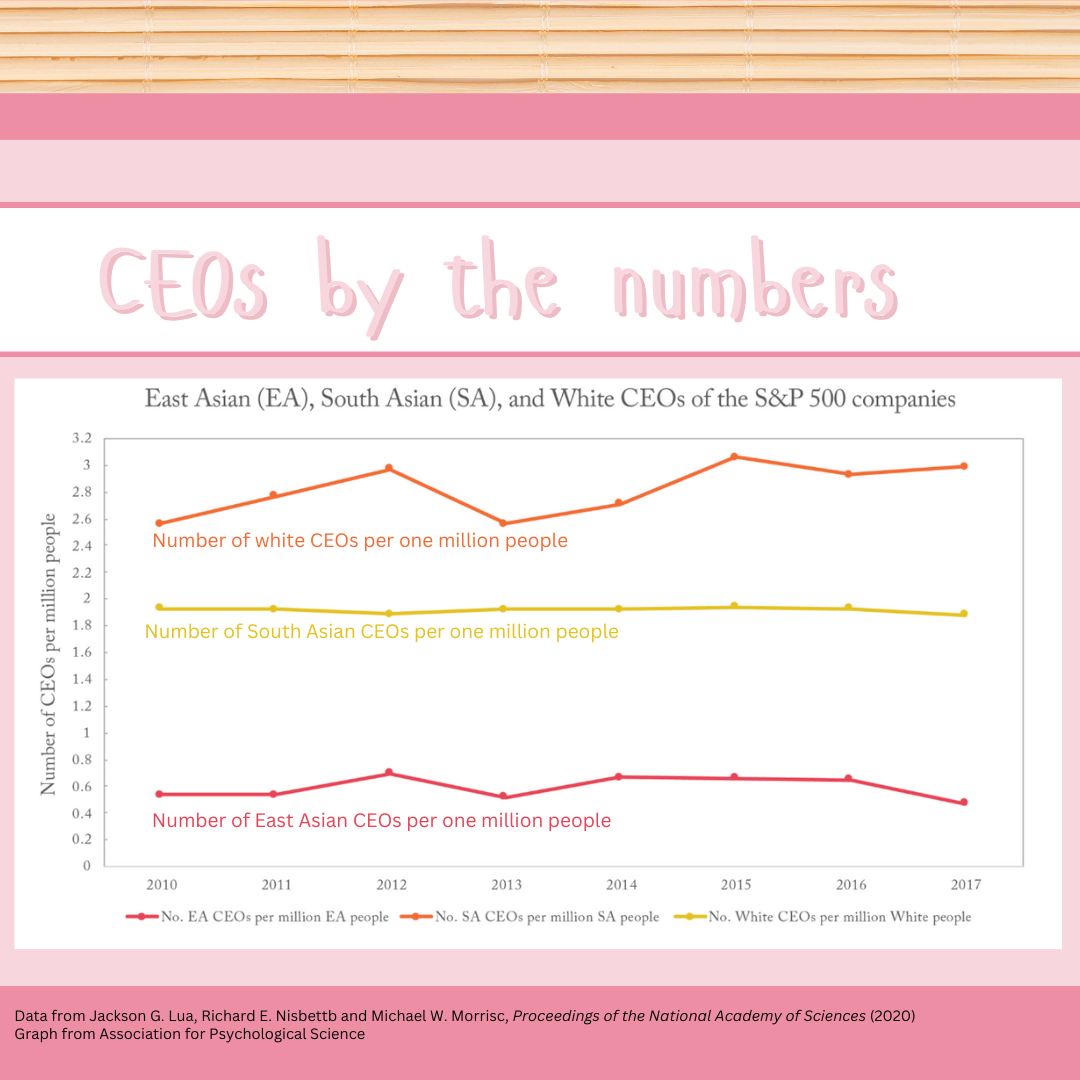
CEOs by the numbers
Line plot graph showing white CEOs at the highest level, South Asian CEOs in the middle, and East Asian CEOs at the lowest level. The largest gap appears between East Asian and South Asian representation.
Data from Jackson G. Lu, Richard E. Nisbett, and Michael W. Morris, Proceedings of the National Academy of Sciences (2020).
Graph from Association for Psychological Science.
-
Slide four
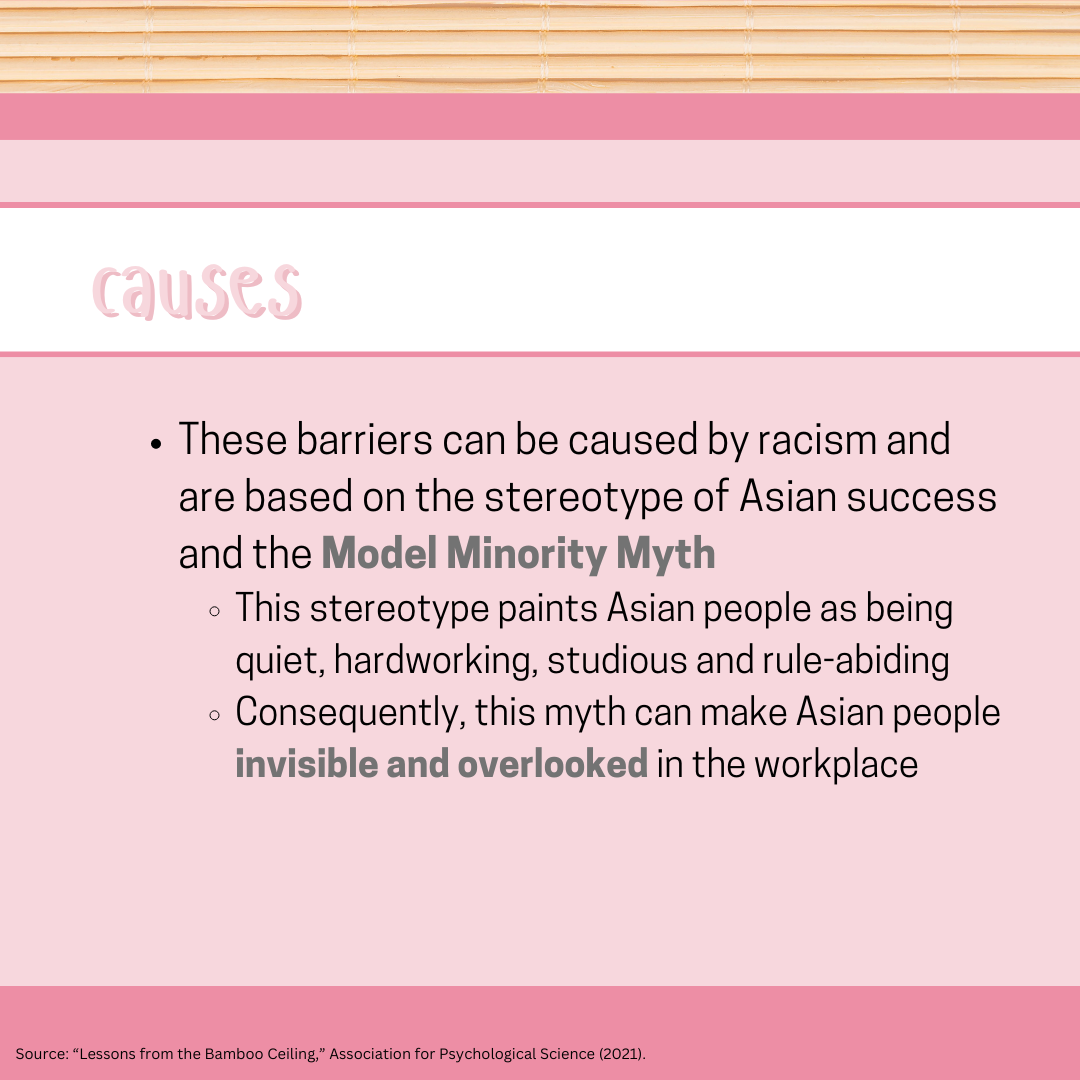
Causes
These barriers are often rooted in racism and reinforced by stereotypes of Asian success and the Model Minority Myth.
This myth portrays Asian people as quiet, hardworking, studious, and rule-abiding.
As a result, Asian people may become invisible and overlooked in workplace leadership pipelines.
Source: “Lessons from the Bamboo Ceiling,” Association for Psychological Science (2021).
-
Slide five
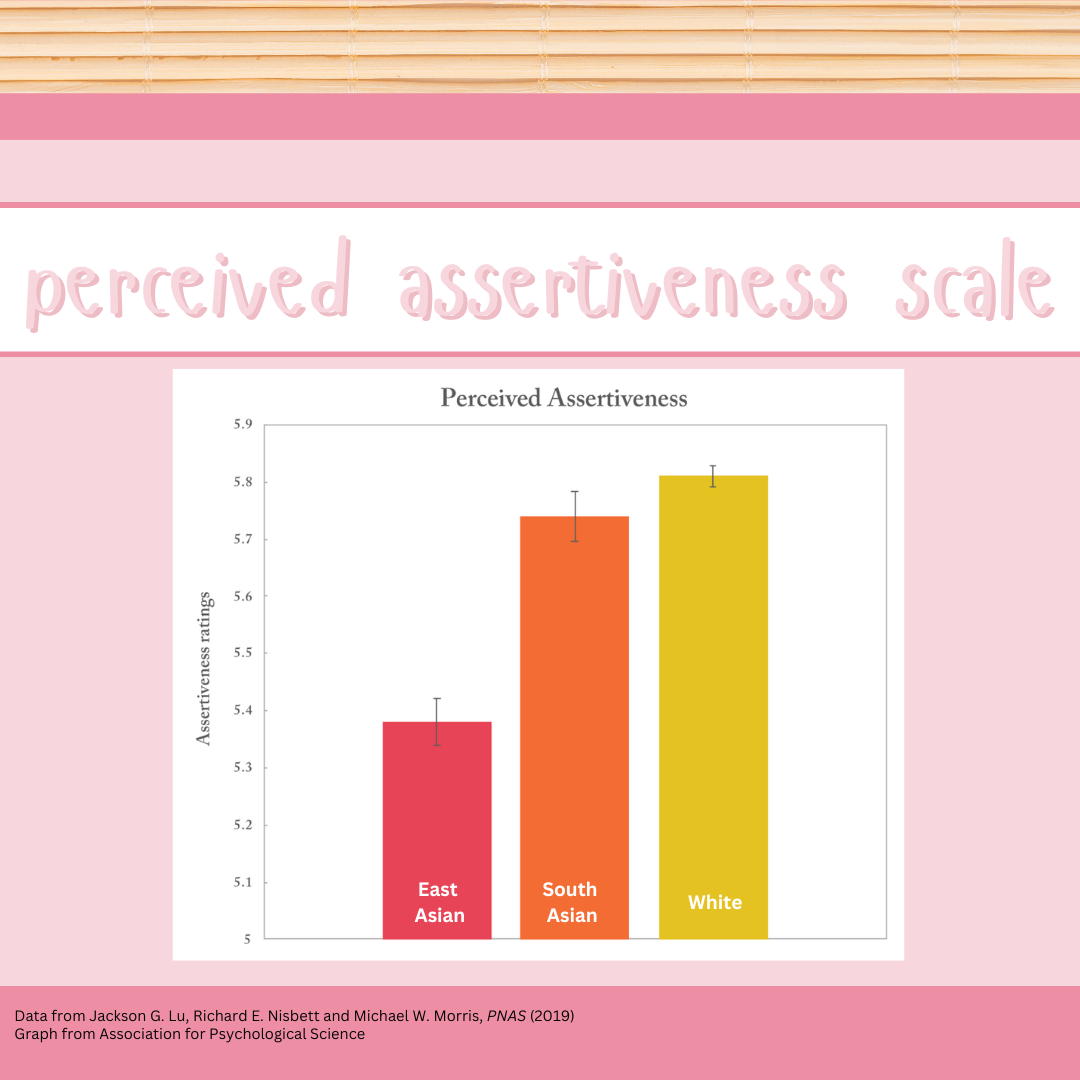
Perceived assertiveness scale
Bar graph showing East Asian individuals rated as least assertive, South Asian individuals in the middle, and white individuals as most assertive. The largest gap appears between East Asian and South Asian groups.
Data from Jackson G. Lu, Richard E. Nisbett, and Michael W. Morris, PNAS (2019).
Graph from Association for Psychological Science.
-
Slide six
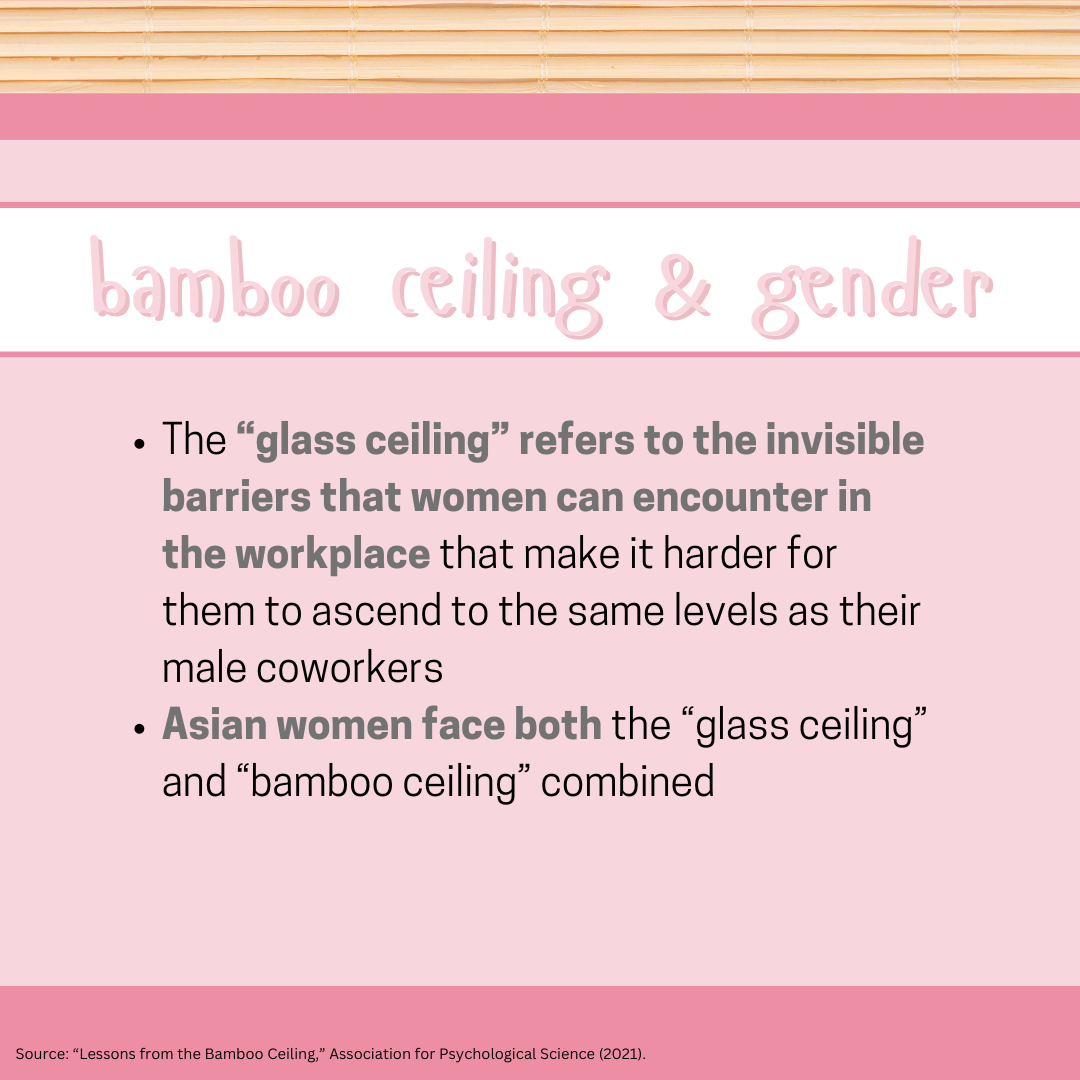
Bamboo ceiling & gender
The “glass ceiling” refers to invisible barriers that prevent women from advancing to the same levels as men in the workplace.
Asian women often experience both the glass ceiling and the bamboo ceiling simultaneously.
Source: “Lessons from the Bamboo Ceiling,” Association for Psychological Science (2021).
-
Slide seven
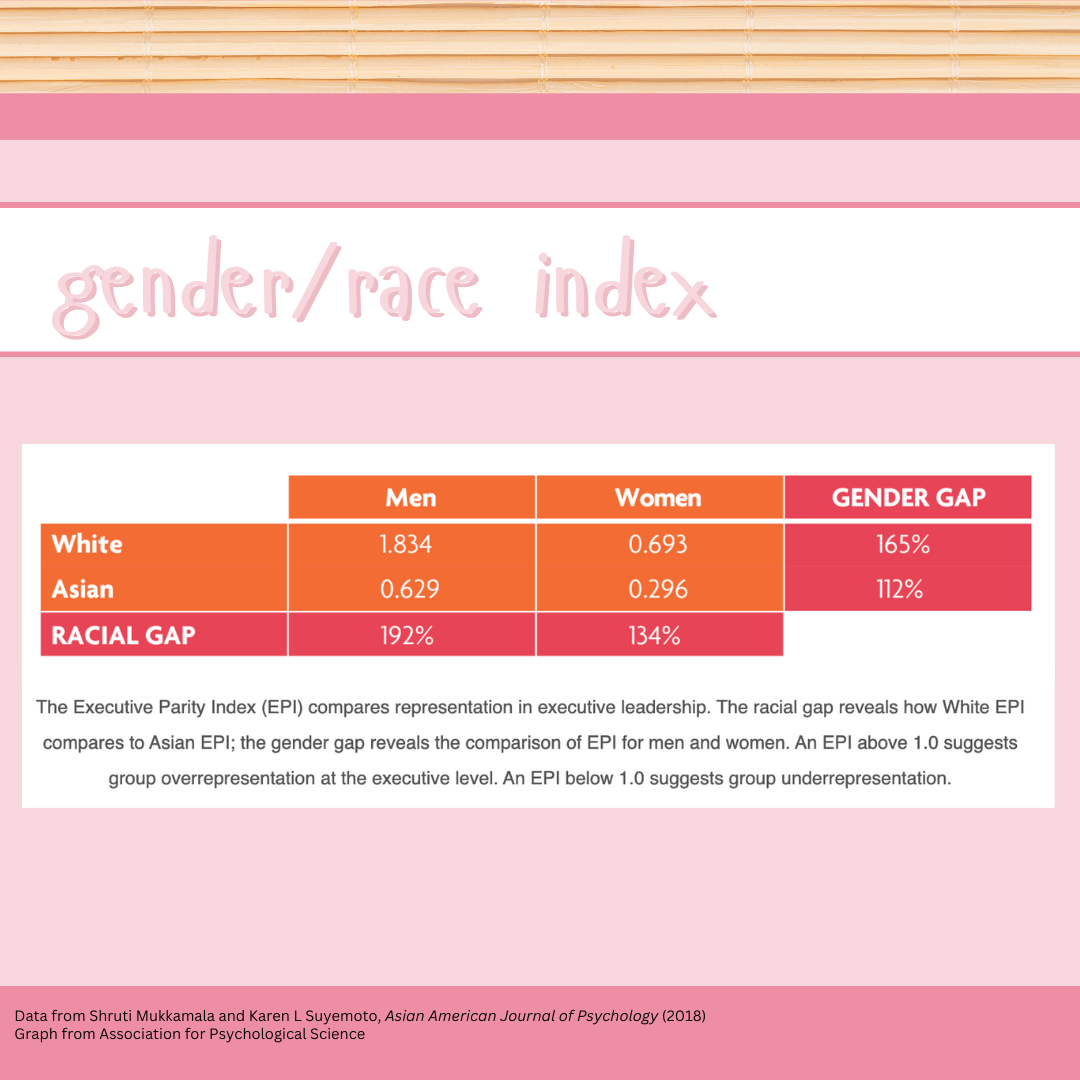
Gender/race index
Chart values:
• White men: 1.834
• White women: 0.693
• Asian men: 0.629
• Asian women: 0.296
Gender gap — men: 165%; women: 112%.
Racial gap — men: 192%; women: 134%.
Data from Shruti Mukkamala and Karen L. Suyemoto, Asian American Journal of Psychology (2018).
Graph from Association for Psychological Science.
-
Slide eight
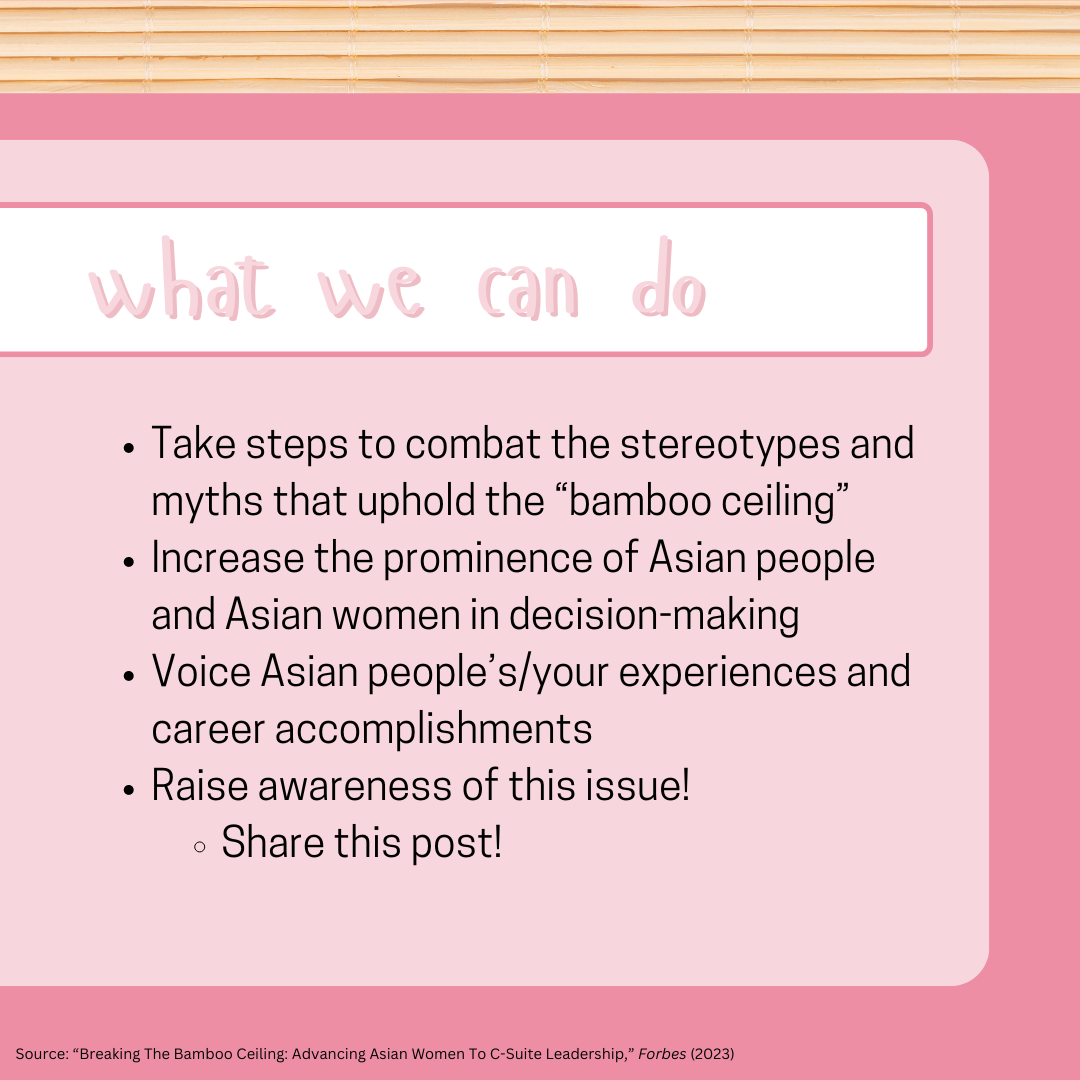
What we can do
• Challenge stereotypes and myths that uphold the bamboo ceiling
• Increase Asian and Asian women’s representation in decision-making roles
• Voice Asian people’s experiences and career accomplishments
• Raise awareness of this issue
Source: “Breaking the Bamboo Ceiling: Advancing Asian Women to C-Suite Leadership,” Forbes (2023).