Girls Adoption Connect
•
April 02, 2024
Overview of adoptee DNA testing
A breakdown of DNA testing and how to get started.
This is to educate about DNA testing, not to promote or discourage it.
Slide descriptions
-
Slide one
Overview: Adoptee DNA testing
This series is meant to educate about DNA testing — not to promote or discourage it.
-
Slide two
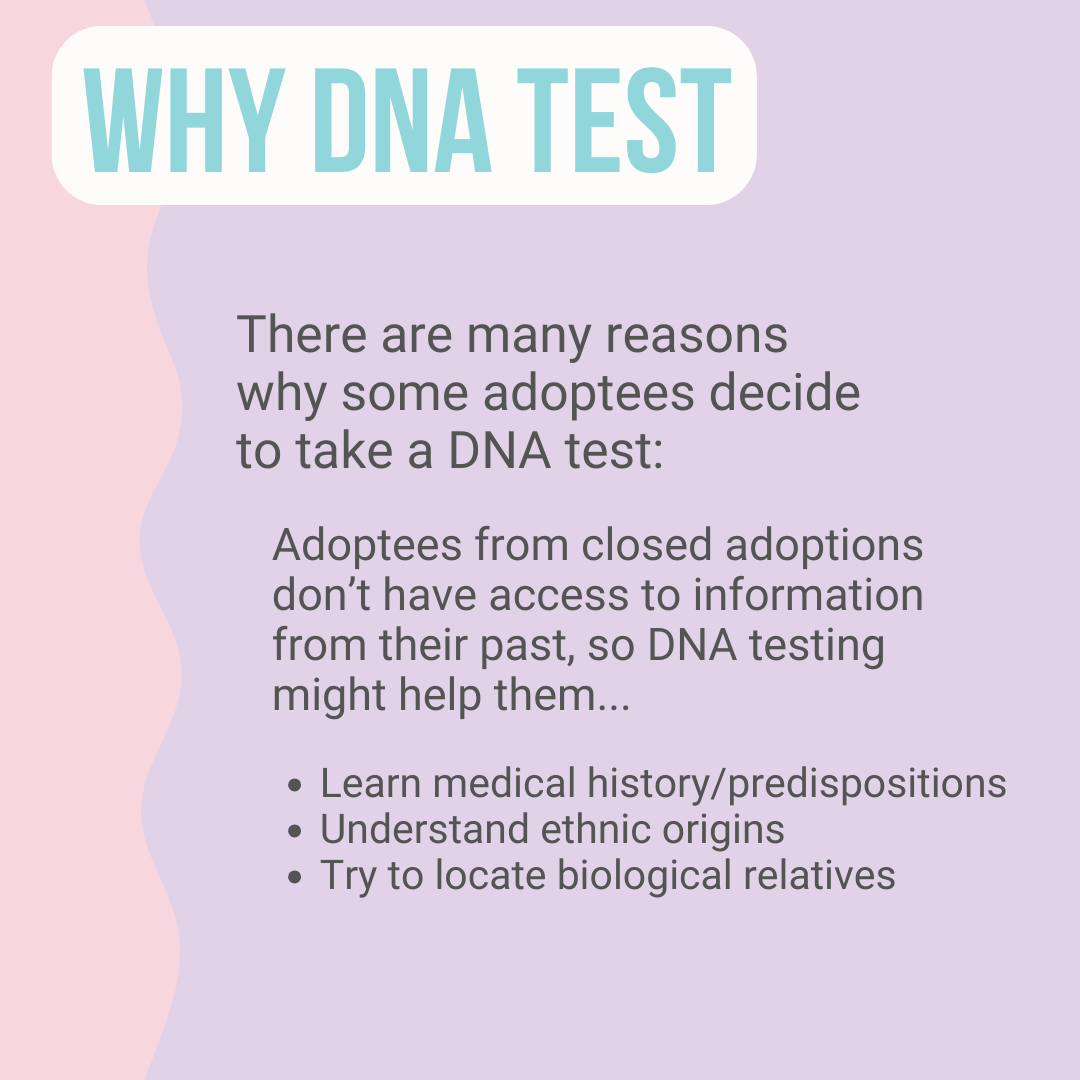
Why DNA test
There are many reasons some adoptees decide to take a DNA test, especially adoptees from closed adoptions who don’t have access to information about their past. DNA testing might help adoptees:
• Learn medical history or genetic predispositions
• Understand ethnic origins
• Try to locate biological relatives
-
Slide three
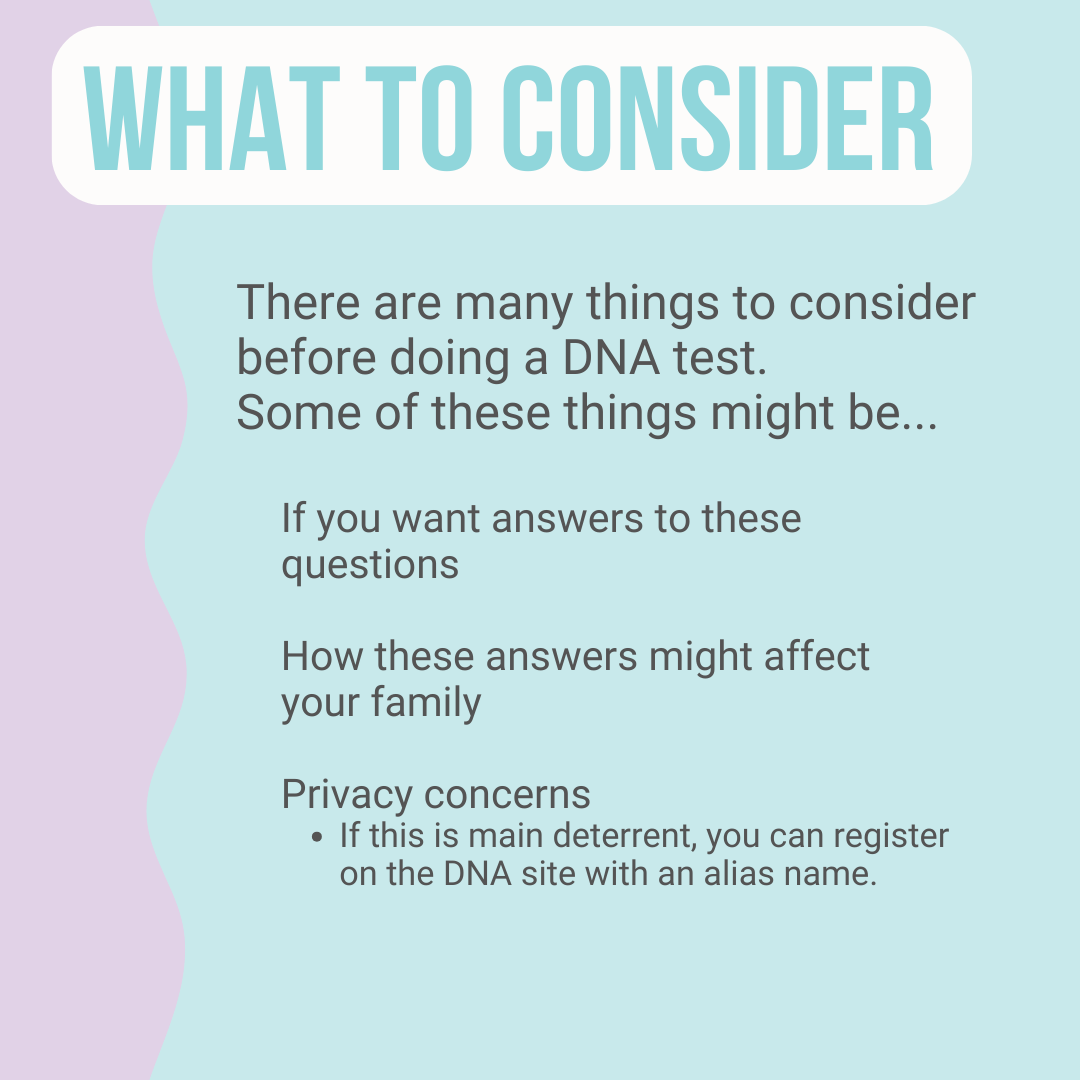
What to consider
There are many things to consider before doing a DNA test. Some of these include:
• Whether you truly want answers to these questions
• How potential answers might affect you or your family
• Privacy concerns
If privacy is a main deterrent, you can register on DNA testing sites using an alias name.
-
Slide four
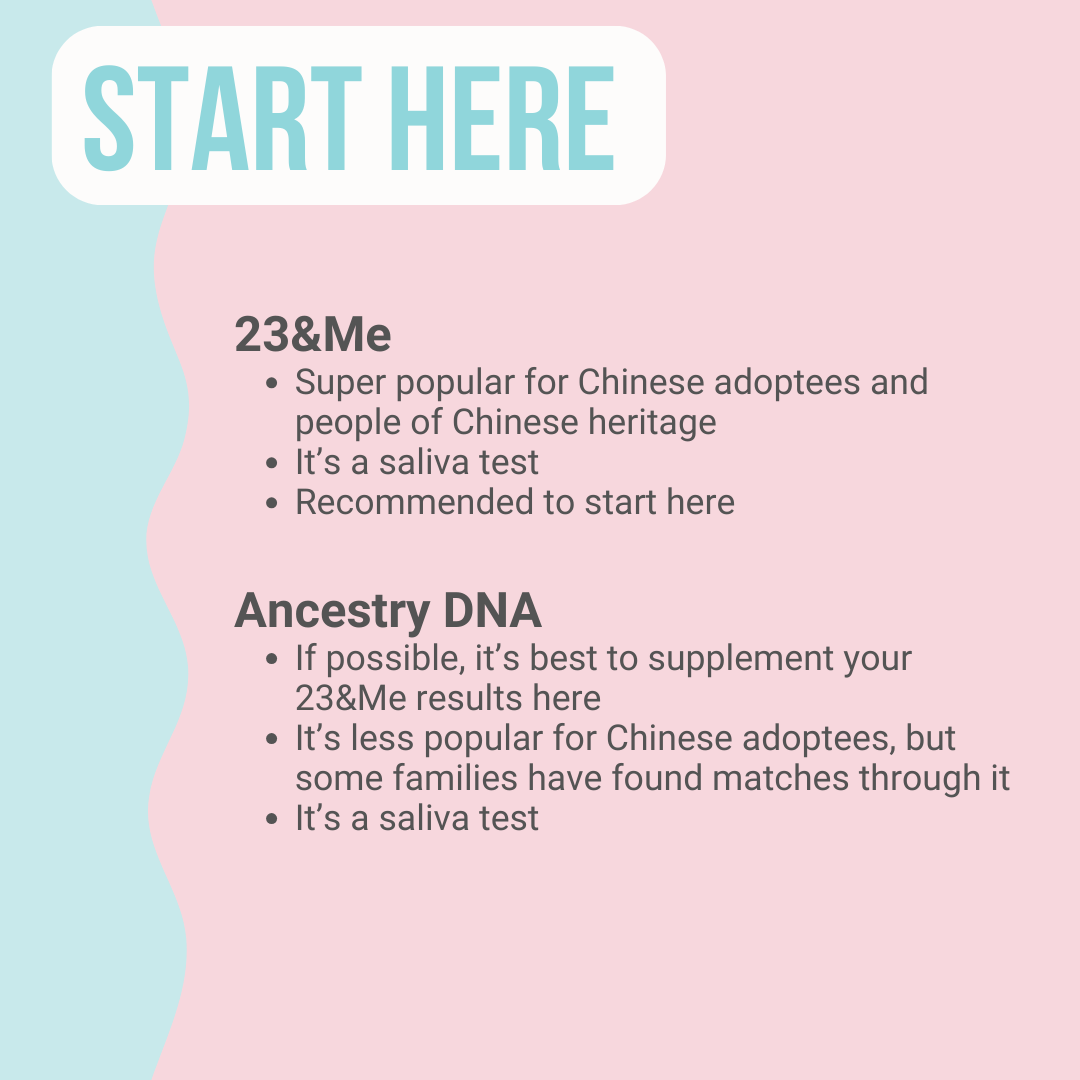
Start here
23&Me
• Very popular among Chinese adoptees and people of Chinese heritage
• Saliva-based test
• Recommended starting point
AncestryDNA
• Best used as a supplement to 23&Me if possible
• Less popular among Chinese adoptees, but some families have found matches
• Saliva-based test
-
Slide five
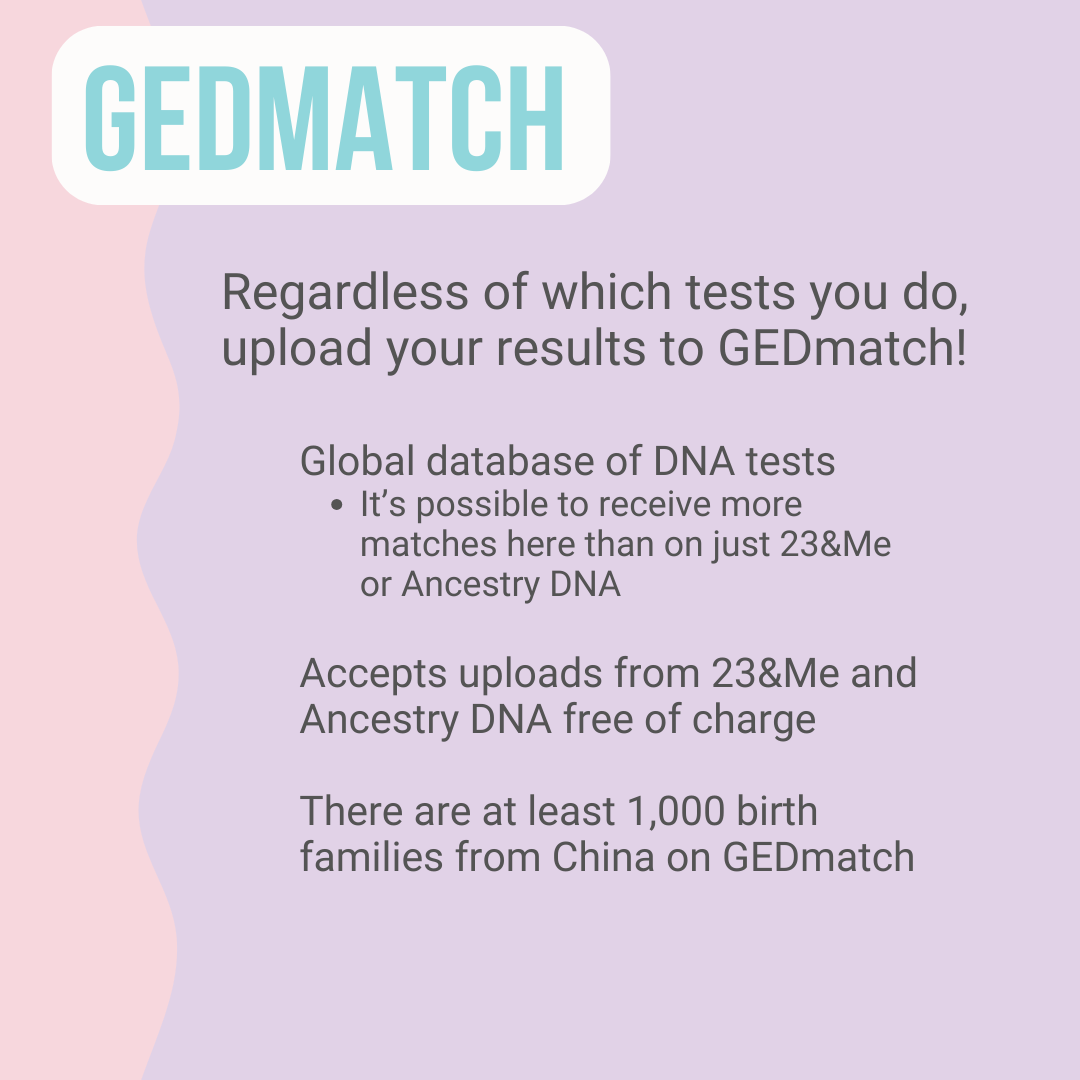
GEDmatch
Regardless of which DNA test you take, upload your results to GEDmatch.
• A global database of DNA tests
• May provide more matches than using 23&Me or AncestryDNA alone
• Accepts uploads from 23&Me and AncestryDNA free of charge
• At least 1,000 birth families from China are currently on GEDmatch
-
Slide six
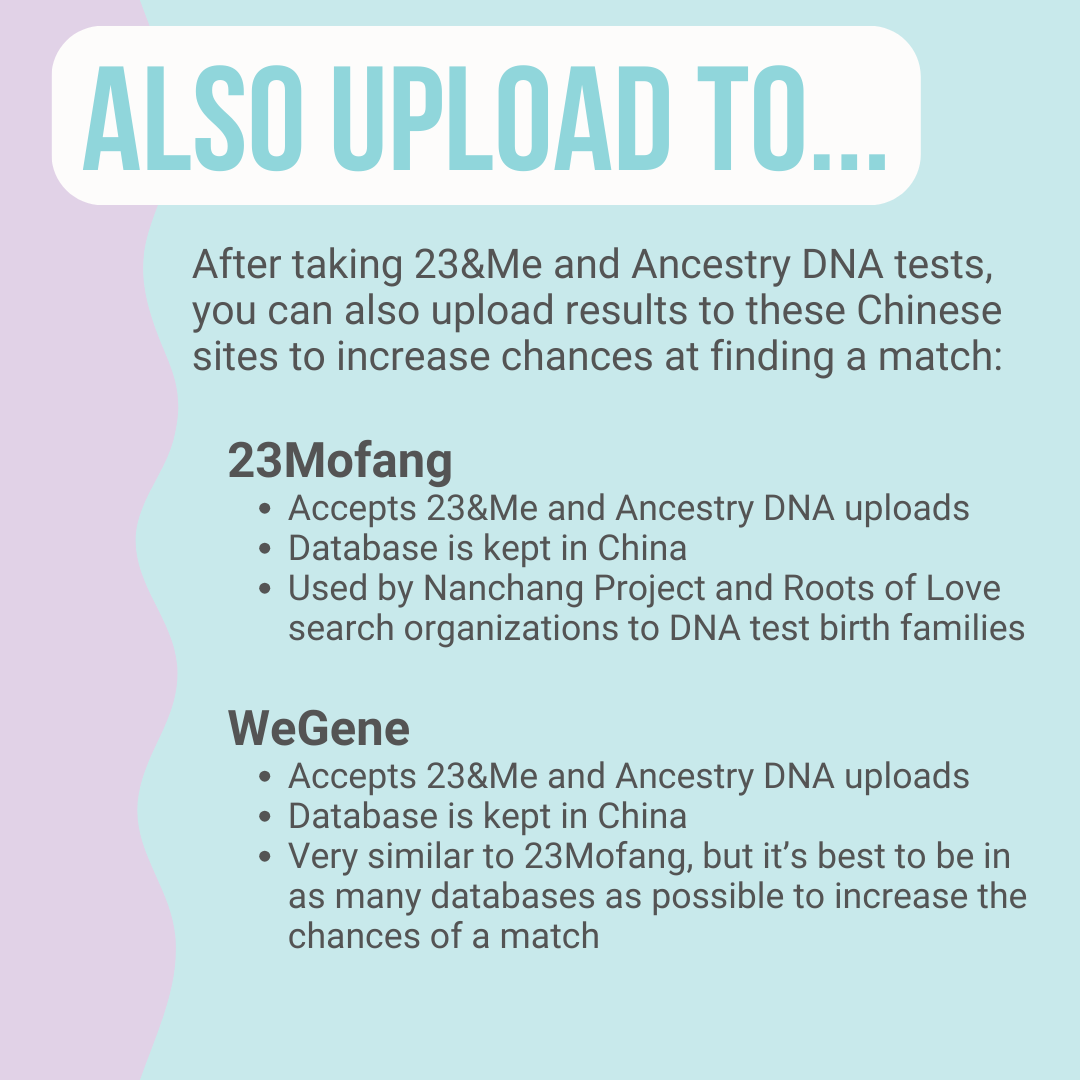
Also upload to…
After taking 23&Me and AncestryDNA tests, you can also upload your results to these Chinese platforms to increase the chances of finding a match:
23Mofang
• Accepts 23&Me and AncestryDNA uploads
• Database is kept in China
• Used by Nanchang Project and Roots of Love to DNA test birth families
WeGene
• Accepts 23&Me and AncestryDNA uploads
• Database is kept in China
• Very similar to 23Mofang — being in multiple databases increases match potential
Sources:
-
International Child Search Alliance