
I spent years in Chinese language classes, not wanting to be there. I remember the weekend mornings I resented when I was about 5 years old, the summer with a private tutor, the tones I didn’t get right, but mostly the feeling of being assigned an identity I hadn’t chosen. My parents sent me because they wanted me to hold onto something. And I spent a long time trying to put it down.
So you can imagine the strange sensation of scrolling through TikTok this year and watching strangers proclaim that they were in their “very Chinese era.”
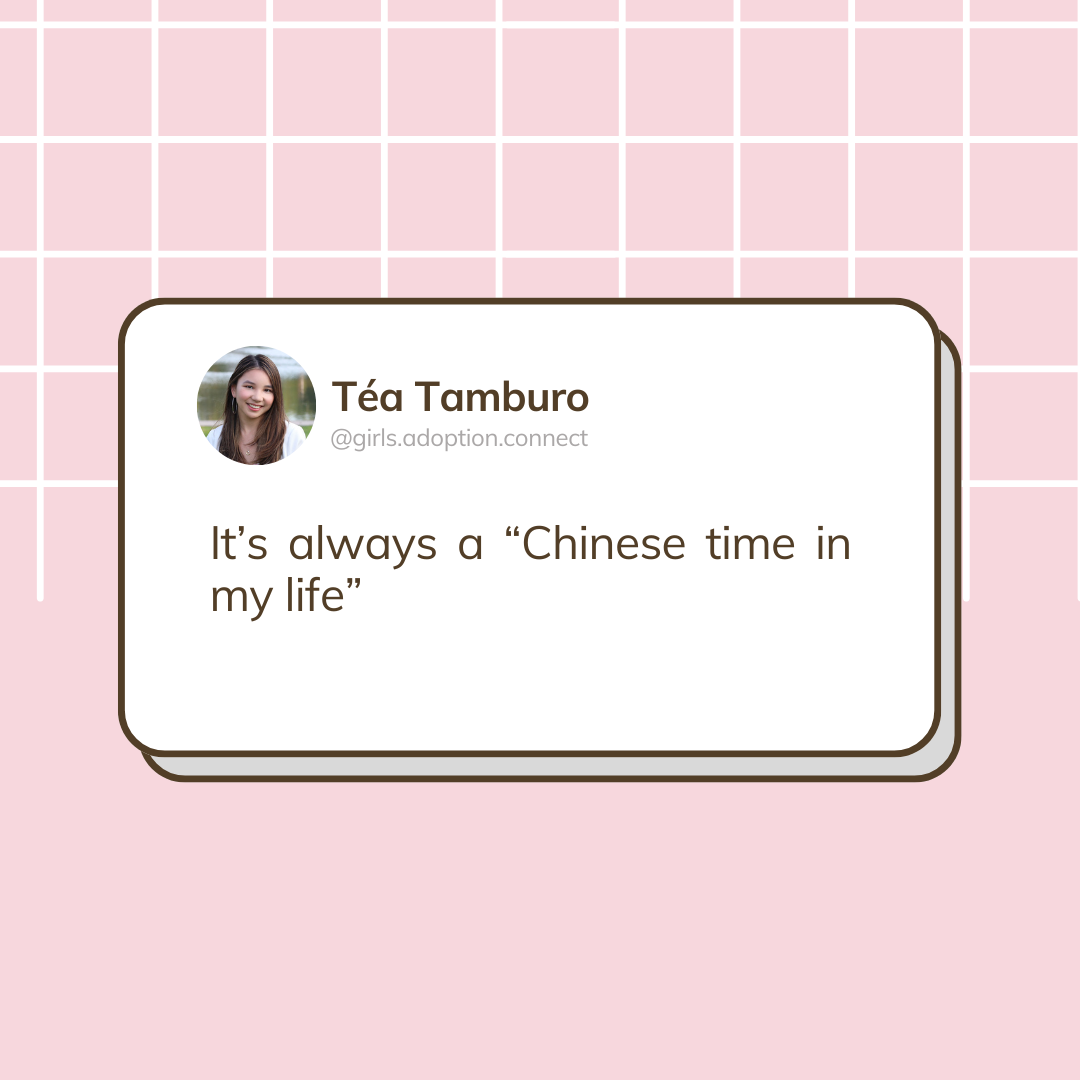
The trend, which references a line from Fight Club, took off in early 2026 among young Westerners who began describing themselves as going through “a very Chinese time” in their lives. It spread quickly, with celebrities joining in, variations like “Chinamaxxing” emerged, and the phrase became a kind of shorthand for a broader cultural moment where Chinese technology, food, fashion, and cities have become aspirational. People were wearing the viral Adidas jacket, cooking hot pot, downloading Chinese apps, and treating it all as a personality.
What feels strange is that I was handed a culture and a language by birthright, spent years trying to push it away, and now I am watching other people reach for it. Honestly, there’s something that feels good about it, even if I can’t fully explain why. Growing up, Chinese culture in Western media was mostly a punchline, a threat, a stereotype or a curiosity to be exoticized. Unexpectedly, it has been nice to watch people approach Chinese culture with interest rather than hostility.
Of course, the trend isn’t perfect. Some videos flatten Chinese culture into a set of recognizable symbols and things that are easy to imitate, but don’t really say much about the deeper parts of the culture itself. Social media trends almost always simplify things that way.
What I’ve had to think about is the phrase itself. “At a very Chinese time of my life.” The “at” implies a before. The “time” implies an after. For the people using it, Chineseness is a season or a vibe. Like it is something to inhabit and then move on from when the algorithm shifts.
Even as a Chinese adoptee, my relationship with my own culture has never been fixed. There have been periods where I’ve wanted to lean in, learn more, and reclaim something, and periods where I’ve wanted distance. The complicated feelings, the identity questions that don’t resolve, and the language classes I didn’t choose — those don’t get left behind when a trend moves on.
But after years of seeing Chinese culture treated as something foreign or threatening, watching people engage with it, even imperfectly, feels like a small acceptance of Chinese people and a quiet pushback against the negative rhetoric that has followed the culture for a while.
Sources:
- Lo-Booth, M., & Costigan, A. (2026, February 7). Why Gen Zs on social media are having 'a very Chinese time in my life.' ABC News. https://www.abc.net.au/news/2026-02-08/you-met-me-at-a-chinese-time-of-my-life/106303830
- Yang, Z., & Matsakis, L. (2026, January 16). Why everyone is suddenly in a 'very Chinese time' in their lives. WIRED. https://www.wired.com/story/made-in-china-chinese-time-of-my-life/